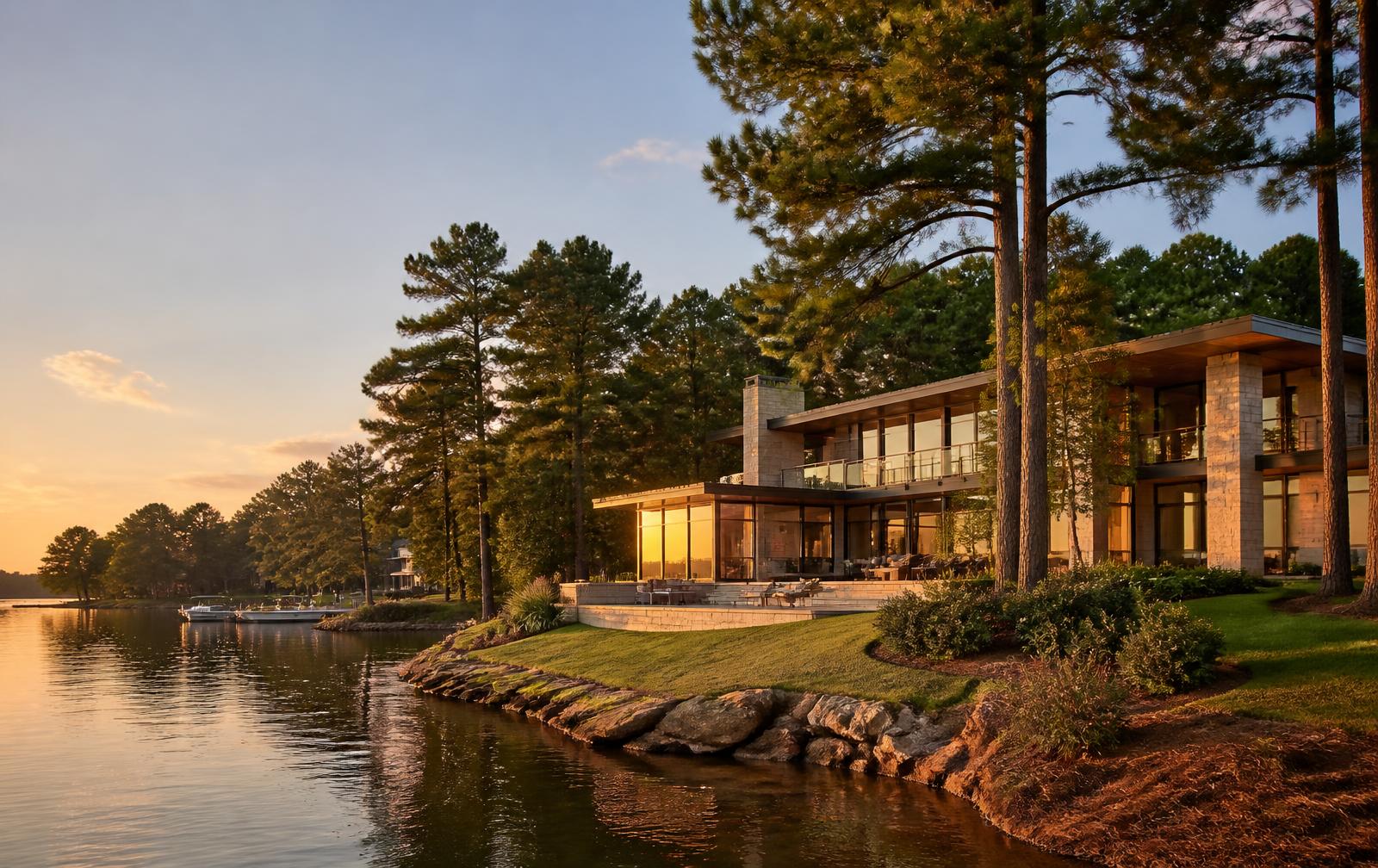
The waterfront estate, reconsidered.
Coves, covered slips, changing water levels, and the property-specific details that determine how a shoreline actually lives.
Waterfront buying at a glance
- Setting
- Gated peninsula, Mooresville NC
- Water depth
- Measure at the dock and verify seasonal conditions
- Best orientation
- West and southwest for long views and evening light
- Dock authority
- Duke Energy Lake Services permits shoreline structures
- Common dock types
- Covered slip, uncovered slip, boat lift, jet-ski ports
The waterfront estate,…
A Point waterfront home is, first, a study in orientation. The relationship among important rooms, daylight, lake views, grade, and the dock can matter more than shoreline footage alone.
The strongest plans treat the dock, path, terrace, and interior as one sequence rather than unrelated amenities.
What makes a great Point waterfront.
Deep, clean water. Not every lot on Lake Norman offers the same usable depth through every season. Measure at the dock and confirm lake-level context rather than relying on an adjective in marketing copy.
Long views. A wide, unobstructed sight line down open water — ideally west-facing for sunsets — is worth more than raw shoreline footage.
Covered dockage. A properly permitted, covered slip protects the boat and doubles as the family's favorite room in the summer.
A usable slope. The walk from house to dock decides how often the dock is used. Gentle grade, a short path, or a well-designed stair beats a dramatic bluff for everyday living.
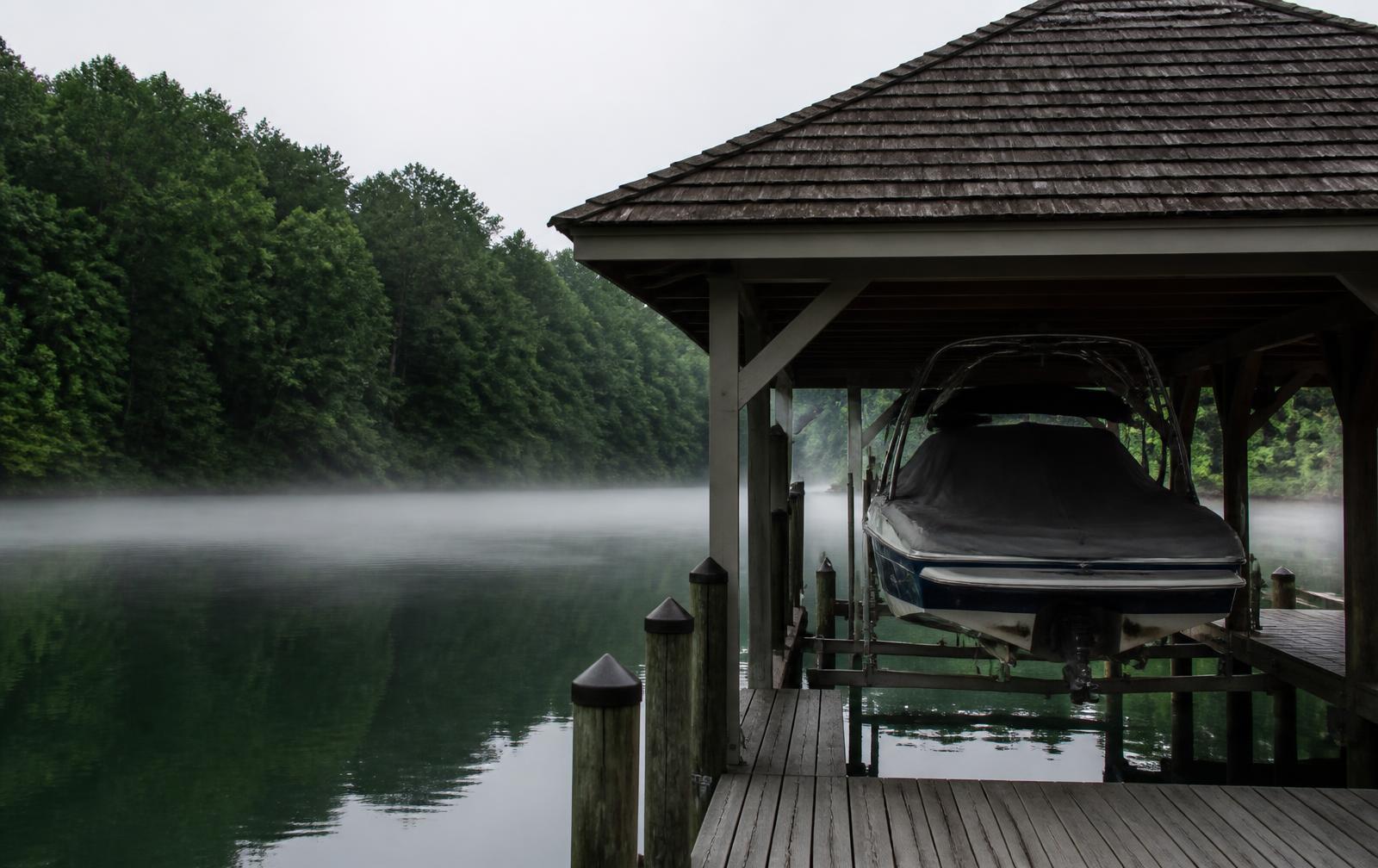
Illustrative editorial photography; verify property-specific conditions independently.
Reading a shoreline before you buy.
Shoreline footage is the number in the listing; it is rarely the number that matters. Walk the lot in the afternoon and check four things instead.
Cove versus open water. A protected cove gives calmer water, easier docking, and fewer wakes. Open water gives the long view and more breeze. The right balance is specific to the boat, exposure tolerance, and household.
Exposure. West and southwest lots collect evening light and sunsets. East-facing lots stay cooler in the afternoon and light up at breakfast. Neither is wrong, but it is worth choosing deliberately.
Neighboring structures. An adjacent covered dock can sit directly in your sight line. Look from where the terrace will be, not from the water.
Winter water level. Lake Norman draws down seasonally. A lot that looks generous in June can be shallow in February, which is exactly when depth should be verified.
Docks, slips, and permitting.
Shoreline structures on Lake Norman are permitted through Duke Energy Lake Services, which governs what can be built, how far it may extend, and how it must be maintained. The community's own covenants and architectural review add a second layer on top of that.
Practically, that means three questions on any waterfront purchase: is the existing dock permitted and is the permit transferable, what would a modification or replacement require, and — on a bare lot — what size and configuration would realistically be approved. Confirm all three in writing during due diligence rather than assuming the neighbor's dock sets the precedent.
The interior conversation.
Great lake homes at The Point resolve a quiet contradiction: they must feel expansive when entertaining and intimate on a Tuesday night in November. That's a question of scale, of warm materials, of controlled sight lines — and of the right interior designer at the table from day one.
Materials also answer to the water. Wet feet, sand, sun on west-facing glass, and humidity in the shoulder seasons punish delicate finishes. The houses that still look right in year ten were specified for that from the start.
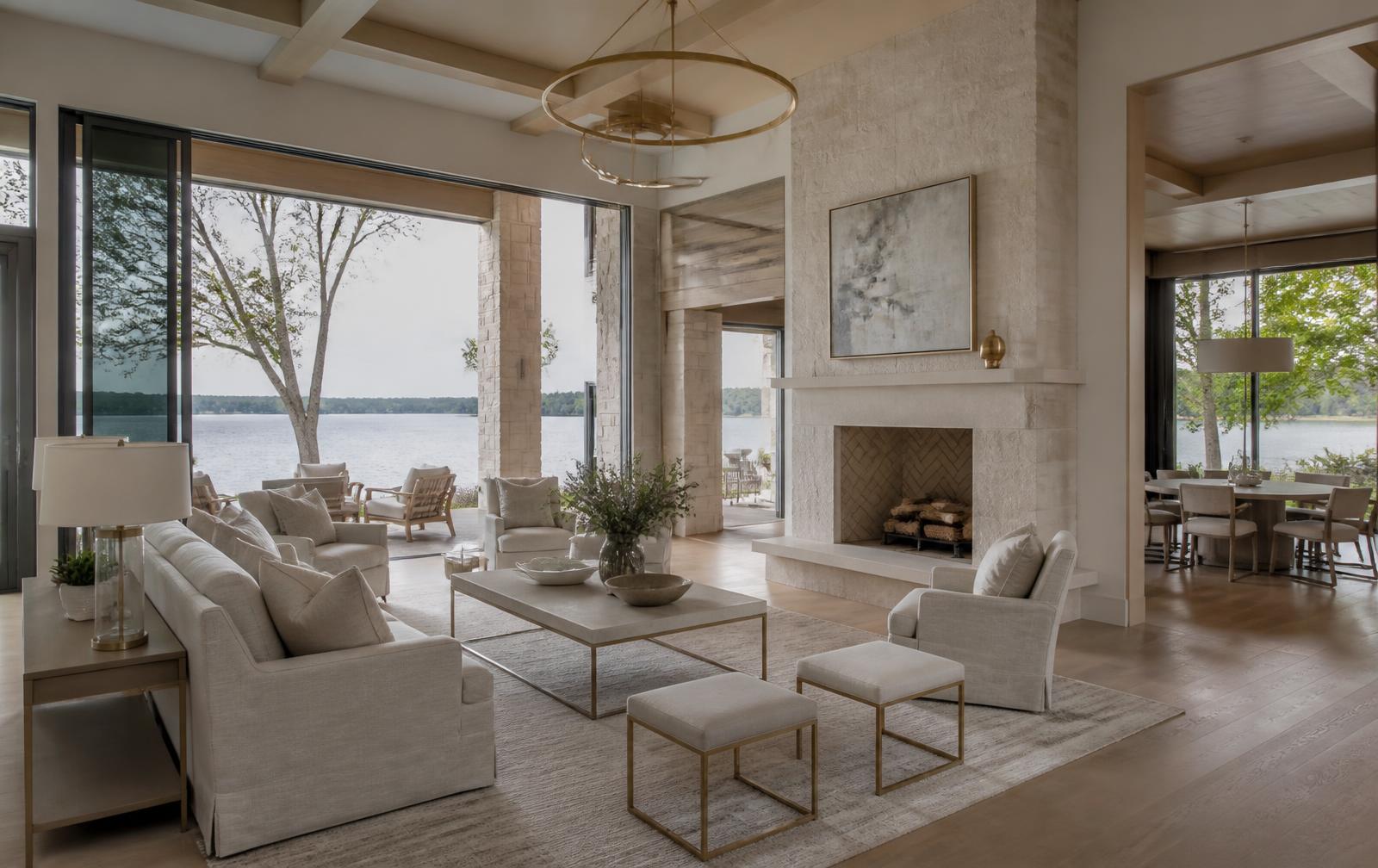
Illustrative editorial photography; verify property-specific conditions independently.
Buying, building, or renovating on the water.
Three paths lead to a waterfront home here. Buying finished is fastest and lets you judge the view from inside the actual rooms. Building on a remaining homesite gives full control over orientation and ceiling heights, at the cost of a design and construction calendar. Renovating an older lake house — often the best value on a premium cove — trades construction risk for a lot that could not be bought otherwise.
The decision usually turns on the lot rather than the house. Excellent water with a dated house is a renovation; an excellent house on compromised water rarely becomes the right answer at any price.
Peters & Associates
The luxury brokerage practice led by Nicholas and Miriam Peters, representing buyers and sellers of estate homes across Charlotte and Lake Norman. For The Point, that means counsel on coves, sightlines, dock rights, and pricing against the community's own comparable sales.
A Peters company — the same family of businesses that publishes this guide.
Answers, before you ask.
What do waterfront homes at The Point typically cost?
Values change with market timing and property-specific factors. Use current closed-sale data and examine shoreline position, dock documentation, condition, view, and improvements rather than relying on a broad range.
Are there build-ready waterfront lots available?
Availability changes. Confirm current on-market information with a licensed real estate professional and investigate whether any undeveloped parcel is buildable before assigning value to it.
What is 'deepwater' on Lake Norman?
Deepwater is an imprecise marketing term. Measure actual depth at the relevant dock location, note the lake level and season, and compare the result with the draft and operating needs of the intended boat.
Does every waterfront home have a private dock?
Most do, but it is never a safe assumption. Dock rights, permitted size, and condition vary lot by lot and should be confirmed in writing before closing.
Who permits a new or replacement dock?
Shoreline structures are permitted through Duke Energy Lake Services, with the community's architectural guidelines applying as well. Both approvals matter.
Is the lake level the same all year?
No. Lake Norman is a managed reservoir and draws down seasonally, which is why water depth should be verified at the dock rather than estimated from a summer visit.