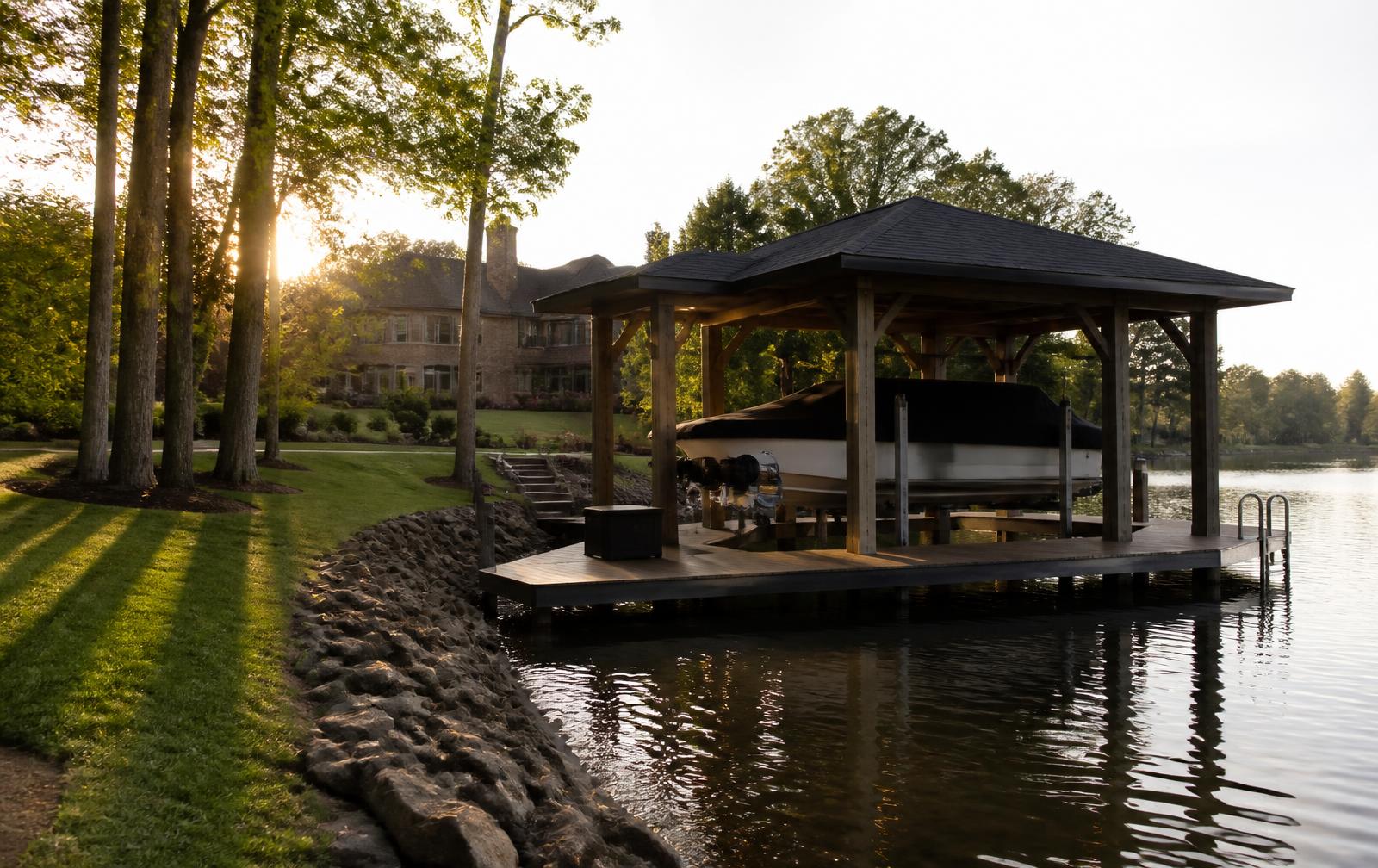
Private docks and boating at The Point.
What a dock at The Point actually involves — shoreline classification, Duke Energy permitting, HOA review, lifts, and day-to-day boating on Lake Norman.
Docks at The Point — At a Glance
- Lake
- Lake Norman (Duke Energy reservoir)
- Community
- The Point, Mooresville, NC
- Docks
- Only on qualifying waterfront lots
- Primary regulator
- Duke Energy Lake Services (shoreline management)
- Second layer
- Community architectural review — verify with the association
- Verify before purchase
- Existing permit, permit transfer, and as-built dock footprint
Private docks and…
A dock is the single most consequential difference between two otherwise similar waterfront homes at The Point. It affects how the house is used, what it costs to maintain, and how it resells.
Two separate rule sets apply, and they are frequently confused. Duke Energy administers the shoreline of Lake Norman under its Shoreline Management Program; the community association administers what happens on private property and how a structure is reviewed within the neighborhood. Neither one speaks for the other, and this website speaks for neither. Verify both, in writing, for the specific address you care about.
Who regulates the shoreline.
Lake Norman is a Duke Energy reservoir. The land under the water and the shoreline buffer are managed by Duke Energy, and private structures on that shoreline require a permit issued by Duke Energy Lake Services. Shoreline is classified, and the classification of a particular parcel determines whether a dock is possible at all, and if so, at what scale.
Rules, application forms, fees, and classification maps change. Treat the current Duke Energy Lake Services guidance as the controlling source and confirm details there before making an offer or planning construction.
- Confirm the shoreline classification for the exact parcel
- Confirm whether an existing dock is permitted and the permit is transferable
- Compare the as-built structure against the permitted footprint
- Confirm what a modification or replacement would require today
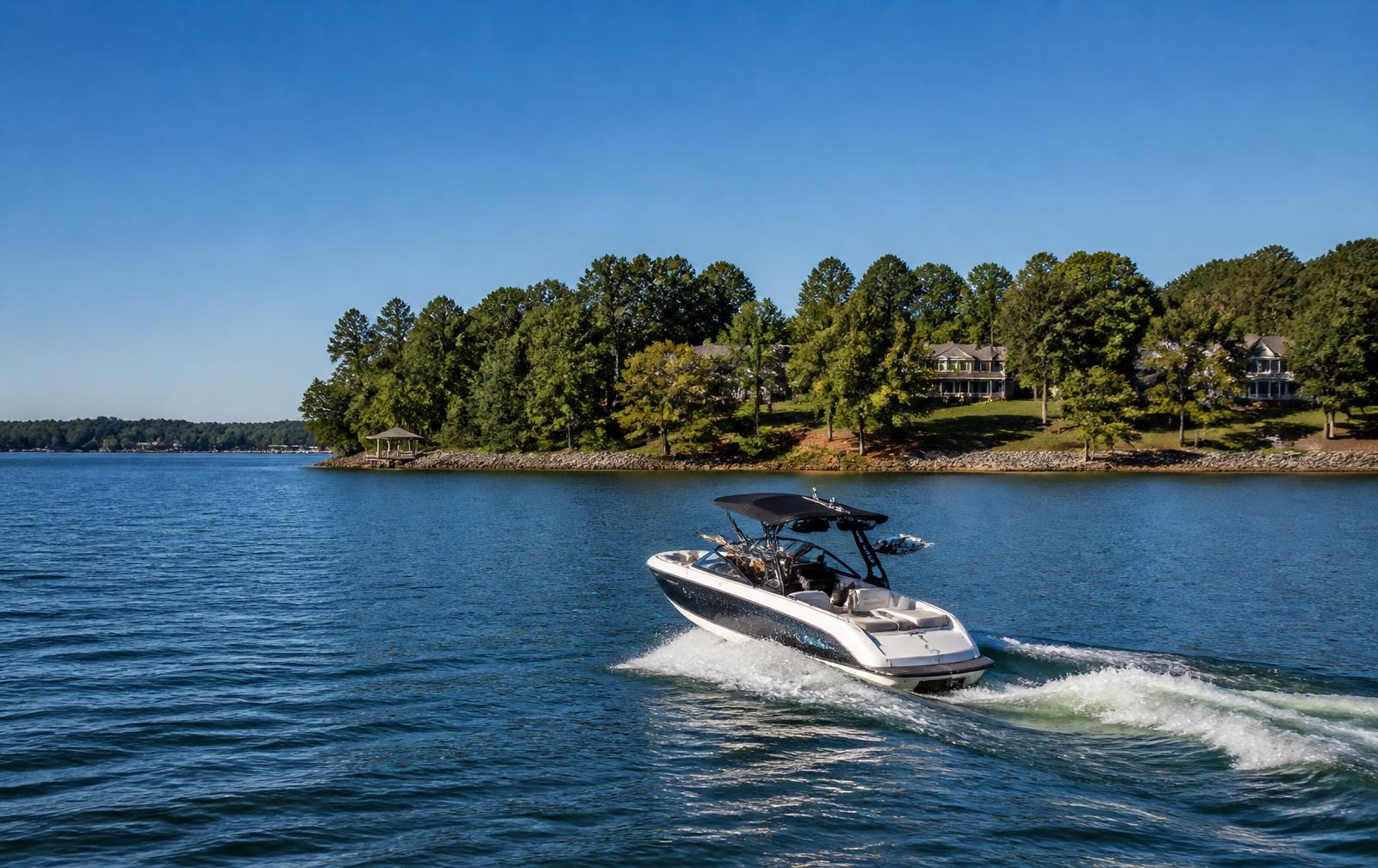
What sets one dock apart from another.
Beyond permission, the practical variables are frontage width, usable water depth at the end of the structure, cove orientation, wind and wake exposure, and how far the walkway has to travel from the yard to the water.
Water depth in particular is site-specific and varies with lake level. Never rely on a marketing description of depth — have it measured during due diligence, ideally at a lower lake stage.
- Frontage width and buildable dock envelope
- Measured depth at the slip, not at the shoreline
- Main-channel exposure versus protected cove
- Grade and distance from house to water
- Covered versus uncovered structure and roof condition
- Existing lift capacity and age of the mechanism
Boat lifts, upgrades, and maintenance.
Lifts are sized to the boat, not to the dock. Changing boats is the most common reason an owner discovers that their lift capacity, slip width, or roof height no longer works. Replacement and modification typically require a fresh permitting review — assume nothing carries over automatically.
Maintenance is ongoing rather than occasional: decking, fasteners, flotation, roof, electrical, and lift cables all have finite lives. Ask for service history the same way you would for a roof or an HVAC system.
Shoreline stabilization and erosion.
Riprap, seawalls, and vegetated buffers each behave differently over time and each carry their own permitting considerations. Wake exposure, boat traffic, and lake level fluctuation drive erosion; a shoreline that looks tidy in a photograph may have been repaired recently or may be due.
Any change to stabilization along the shoreline is a regulated activity. Confirm current requirements with Duke Energy Lake Services before planning work, and confirm any additional community review requirements with the association.
Boating from The Point.
From a dock on the peninsula, the practical range covers a large portion of the main body of Lake Norman — roughly 32 miles of lake length and, by Duke Energy's figure, more than 500 miles of shoreline in total. Cruising times depend far more on your cove position and the season than on distance alone.
Summer weekends bring heavy main-channel traffic and wake; weekday mornings and shoulder seasons are calm. If boating is a primary reason for buying here, see the water on both a Saturday afternoon and a Tuesday morning before deciding which exposure you want.
Peters Custom Homes
Several of the peninsula's most disciplined houses — and a good number of its whole-home renovations — came off this firm's boards. The work is architect-led and budget-transparent, which is why owners tend to return for a second and third house.
Named editorially. This guide is independent and is not a brokerage, builder, or design firm.
Answers, before you ask.
Do all homes at The Point have a private dock?
No. Only waterfront lots with a qualifying shoreline classification and an approved permit can have a dock. Golf-frontage and interior homesites do not. Verify the permit status of a specific property rather than assuming.
Who issues dock permits on Lake Norman?
Lake Norman is a Duke Energy reservoir, and private shoreline structures are permitted through Duke Energy Lake Services under its shoreline management program. Community architectural review is a separate, additional layer.
Does a dock permit transfer when a house is sold?
Permit transfer is handled through Duke Energy's process and is not automatic in the way buyers often assume. Confirm current transfer requirements and the status of the existing permit during due diligence.
Can I add a boat lift or enlarge an existing dock?
Modifications are regulated. Assume any change to size, roof, or configuration requires review under the current rules, and verify both the Duke Energy requirements and any community architectural requirements before ordering materials.
How deep is the water at The Point?
Depth is site-specific and changes with lake level. There is no single figure for the community. Have depth measured at the slip during due diligence rather than relying on a listing description.
Are HOA rules and Duke Energy rules the same thing?
No. Duke Energy regulates the shoreline and structures over the water; the community association governs private property and its own review process. Both may apply, and each must be verified separately.