Technology that disappears.
Automation, cinema, sound, and lighting engineered so the house simply behaves — with nothing on the wall to explain.
Smart home planning at a glance
- Systems to plan
- Lighting, shades, audio, video, network, security
- Best time to start
- With the electrical plan, before rough-in
- Typical platforms
- Crestron, Savant, Control4, Lutron, Josh.ai
- Network standard
- Wired backbone, enterprise Wi-Fi access points
- Lake-specific loads
- Dock lighting, dock audio, exterior cameras
Technology that disappears.…
The right smart-home partner is invisible on move-in day and unmistakable a year later, when the shades come down at dusk, the music follows you room to room, and the theater is ready with one gesture.
Lake Norman houses ask more of technology than a typical suburban build. Rooms are large and open, glass runs floor to ceiling on the west elevation, outdoor living spaces carry sound and light all the way to the dock, and the family is often away for weeks at a time. Each of those facts changes what should be wired, where equipment lives, and how the system is controlled.
The six systems worth planning for.
Lighting control. The single system homeowners notice most. Keypads replace banks of switches, scenes replace guesswork, and the house dims itself as the sun crosses the lake. Retrofitting it later means opening walls.
Motorized shades. A west-facing wall of glass is glorious at seven and punishing at five. Shades solve glare, heat gain, and privacy at once — and the pockets that hide them have to be framed during construction, not chosen afterward.
Whole-home audio. Architectural speakers in ceilings, soffits, loggias, and dock structures, zoned so the kitchen, porch, and slip can each play something different.
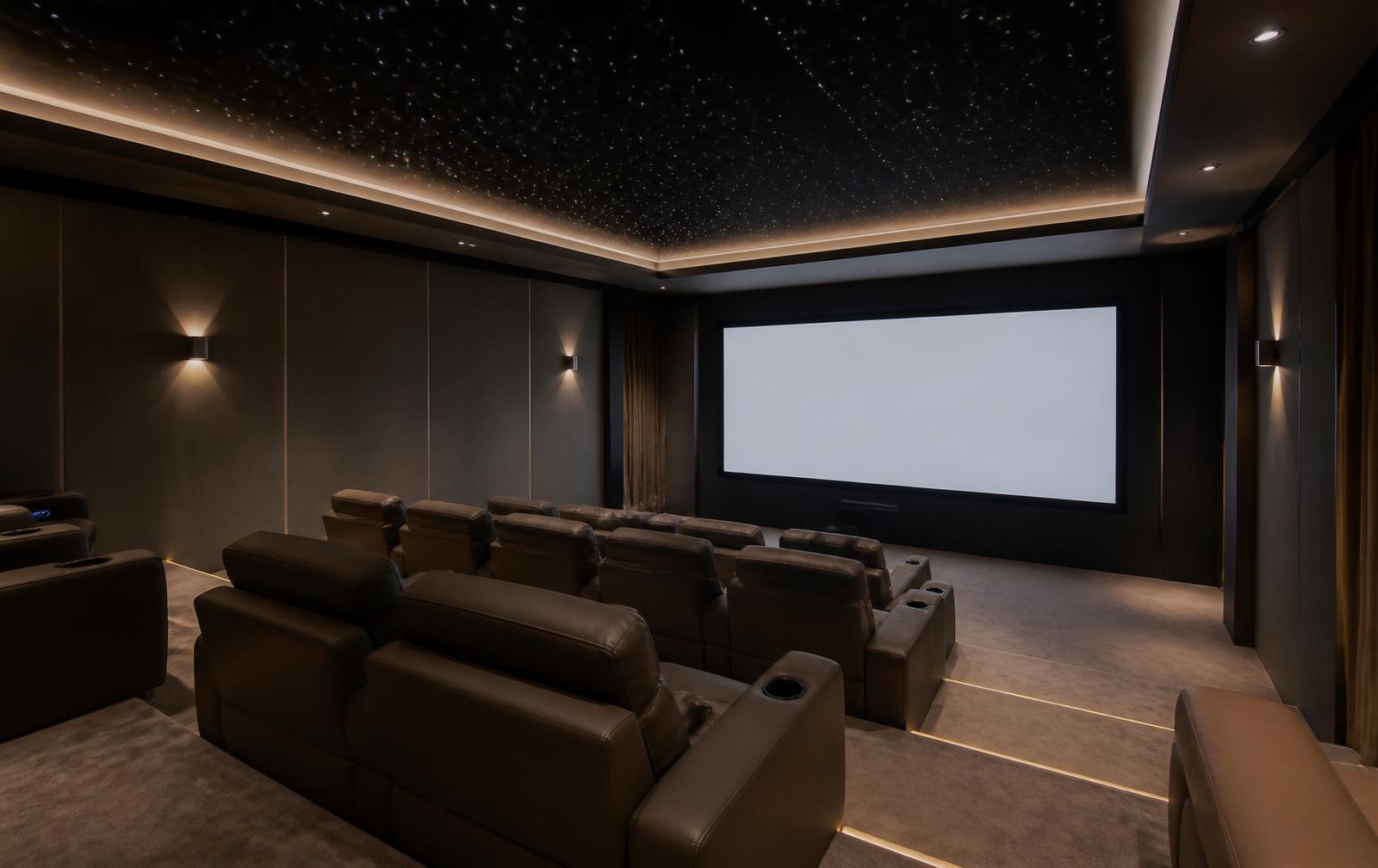
Dedicated cinema or media room. Isolation, seating geometry, acoustic treatment, and sightlines are decided in framing. A projector chosen later cannot fix a room shaped wrong.
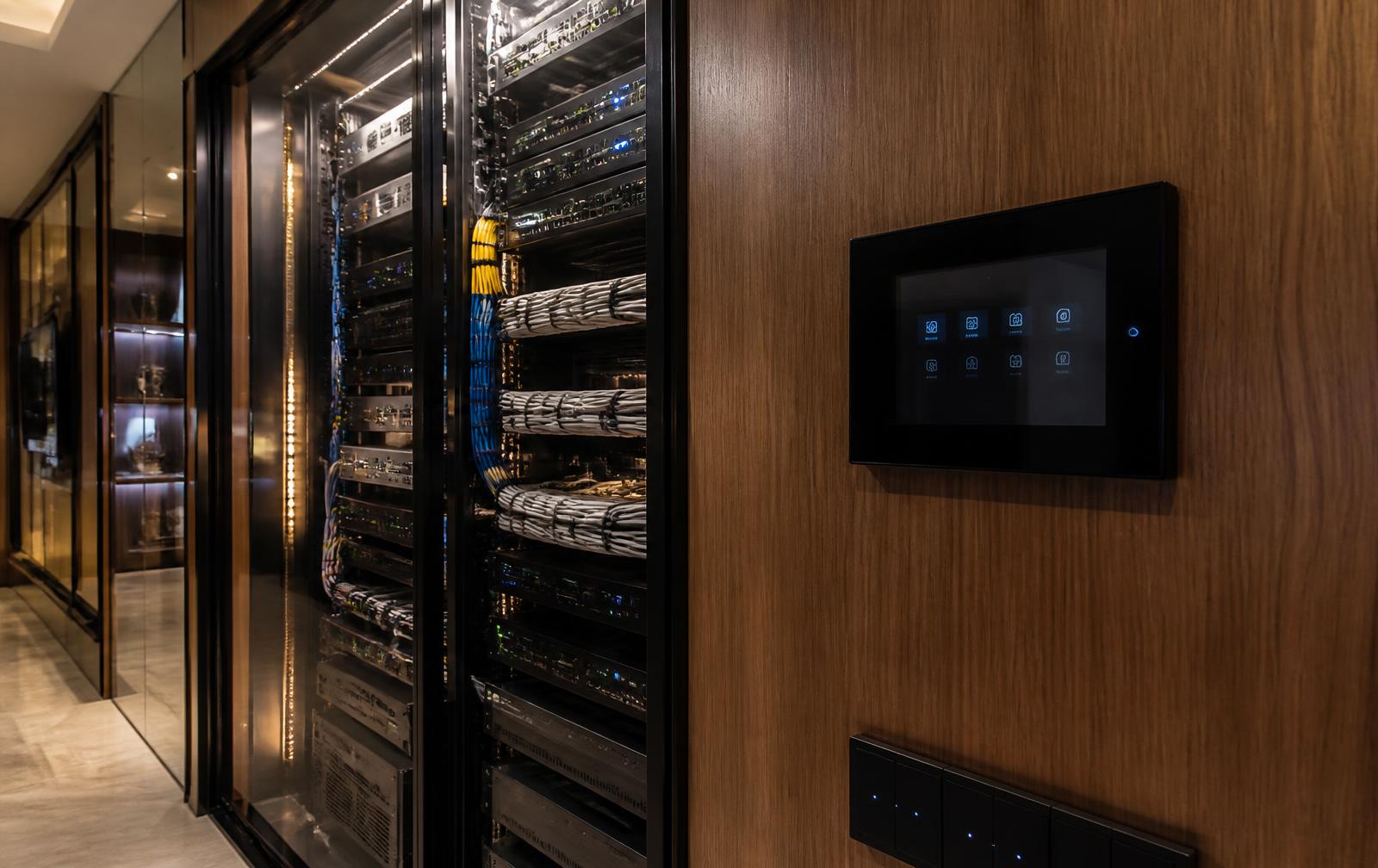
Networking. Everything above rides on it. A wired backbone to every access point, a proper rack with ventilation, and business-grade equipment are the difference between a house that works and a house the family complains about.
Security and cameras. Discreet exterior coverage, water-side views, door stations, and remote access matter most for owners who travel or keep a second residence.
When to engage a smart home integrator.
The useful answer is early — the same week the electrical plan is finalized, and ideally while the architect is still moving walls. Pre-wire is the cheapest hour of the entire project. Conduit, back boxes, speaker cutouts, shade pockets, and rack location cost almost nothing before drywall and cost a great deal afterward.
On renovations the sequence is the same, compressed. Any wall opening is an opportunity to add a conduit path; any ceiling opened for HVAC is a chance to place speakers where they belong rather than where wire could be fished.
Choosing a platform.
Crestron, Savant, Control4, and Lutron all build systems capable of running a Lake Norman estate well. The platform matters less than the integrator's depth on it. A firm that programs one platform every week will outperform a firm that occasionally sells three.
Weigh three questions: how the family actually wants to control the house — keypad, touch panel, phone, or voice; how much of the system must keep working if the internet does not; and who answers the phone in year four when a driver needs an update. The best home automation on Lake Norman is defined mostly by that last answer.
What lake living adds to the scope.
Dock power and lighting, marine-rated outdoor speakers, exterior camera coverage toward the water, irrigation and landscape lighting control, boat lift monitoring, and water-leak sensors in mechanical rooms are all routine here and unusual elsewhere. So is generator integration — storms move across the lake quickly, and an automated house should fail gracefully.
Sun and humidity also shorten the life of exterior equipment. Specifying for the environment at design time avoids replacing speakers and cameras every few seasons.
One integrator, one point of accountability.
A single senior technology integrator sitting at the same table as the architect, builder, and interior designer is the difference between technology that works for a decade and technology that becomes the family's least favorite topic by year two.
That seat matters most in three conversations: where the equipment rack lives and how it is cooled; how keypads and panels are placed so the designer's walls stay clean; and how the electrical, lighting, and shade plans are coordinated into one drawing rather than three.
Peters Audio Video
Networks, lighting, shading, sound, cinema, and security designed to disappear into the architecture instead of competing with it. The distinction between a system that ages well and one that dates in three years is almost always made during pre-wire.
Named editorially. This guide is independent and is not a brokerage, builder, or design firm.
Answers, before you ask.
When should we engage a smart-home integrator?
The same week you finalize the electrical plan. Every week later means compromises — and every week earlier means a cleaner, more capable finished system.
What is the best smart home system for a Lake Norman house?
There is no single best platform. Crestron, Savant, Control4, and Lutron can each run an estate well; the deciding factors are how the family wants to control the house, how much must work without internet, and the integrator's depth on the platform they install.
Can smart home automation be added to an existing home?
Yes. Lighting control, shades, audio, and networking can all be retrofitted, though the work is easier and cleaner when combined with a renovation that already opens ceilings or walls.
What does home automation cost at this level?
Scope drives the number far more than brand. A lighting, shade, audio, and network package for a large lake home is a meaningfully different budget from a single media room, so the useful step is a room-by-room scope before any pricing conversation.
Does automation work on the dock and outdoor spaces?
It should. Dock lighting, marine-rated speakers, exterior cameras, and landscape lighting are usually the most-used parts of the system between April and October, and all of it depends on conduit run during construction.