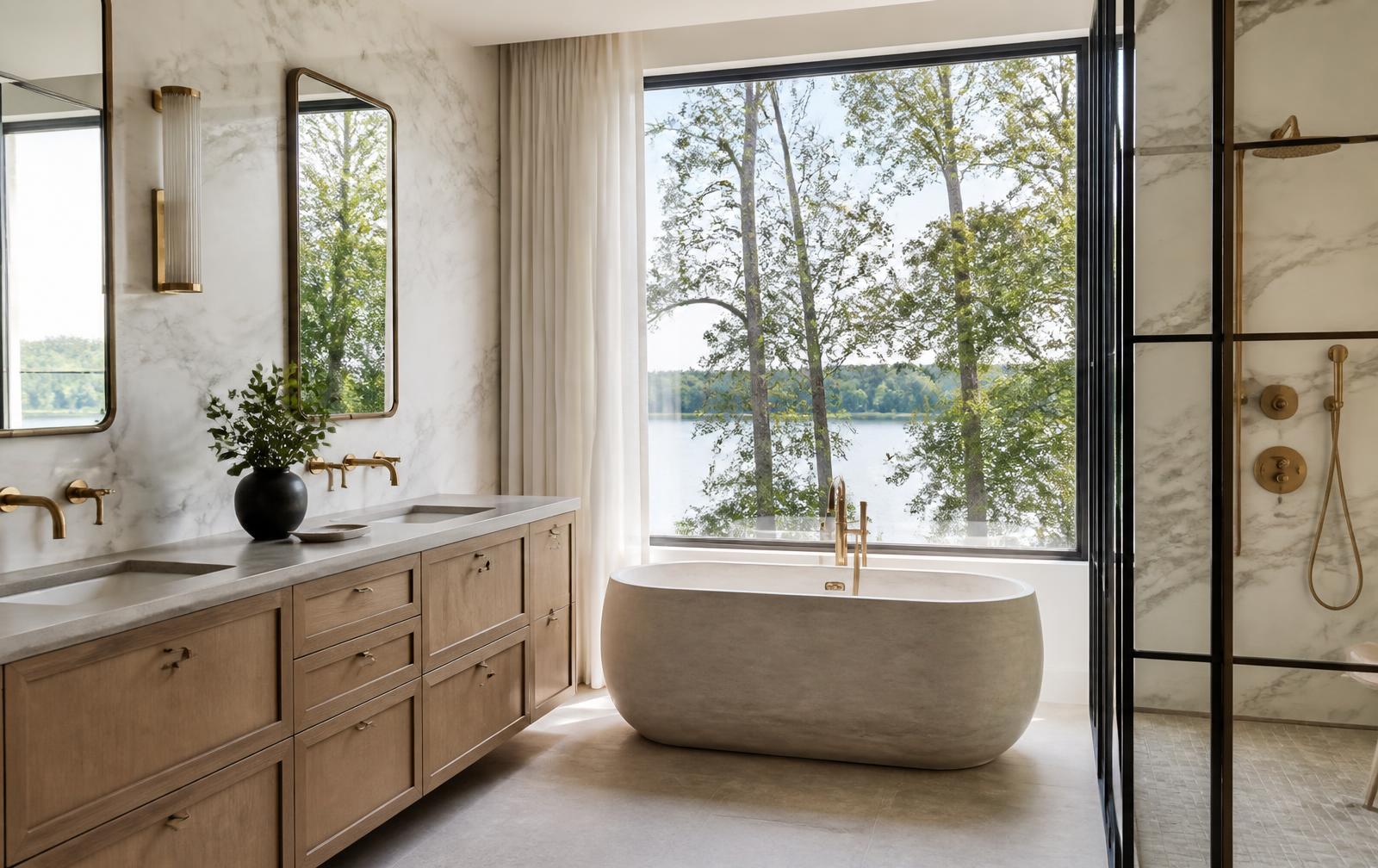
The second life of a great house.
Many of the finest positions at The Point were built twenty years ago. The lot is irreplaceable. The house is not.
The second life…
The best waterfront and golf positions inside the gates were claimed early. That means the strongest opportunity in the community is often a first-generation home on a lot that could not be assembled again today.
A well-planned renovation buys the address, the shoreline, and the mature landscape — then rewrites everything above the foundation to the standard of a new build.
Deciding what to keep.
The first question is structural and geometric: does the existing footprint face the water correctly, and can ceiling heights, window openings, and circulation be reworked without fighting the frame?
- Orientation to water, sunset, and prevailing view
- Ceiling height and roof structure capacity
- Foundation and grade — can the lower level be opened up
- Mechanical, electrical, and plumbing age and routing
- Envelope: windows, roofing, cladding, and moisture history
- Setbacks, coverage limits, and shoreline buffer constraints
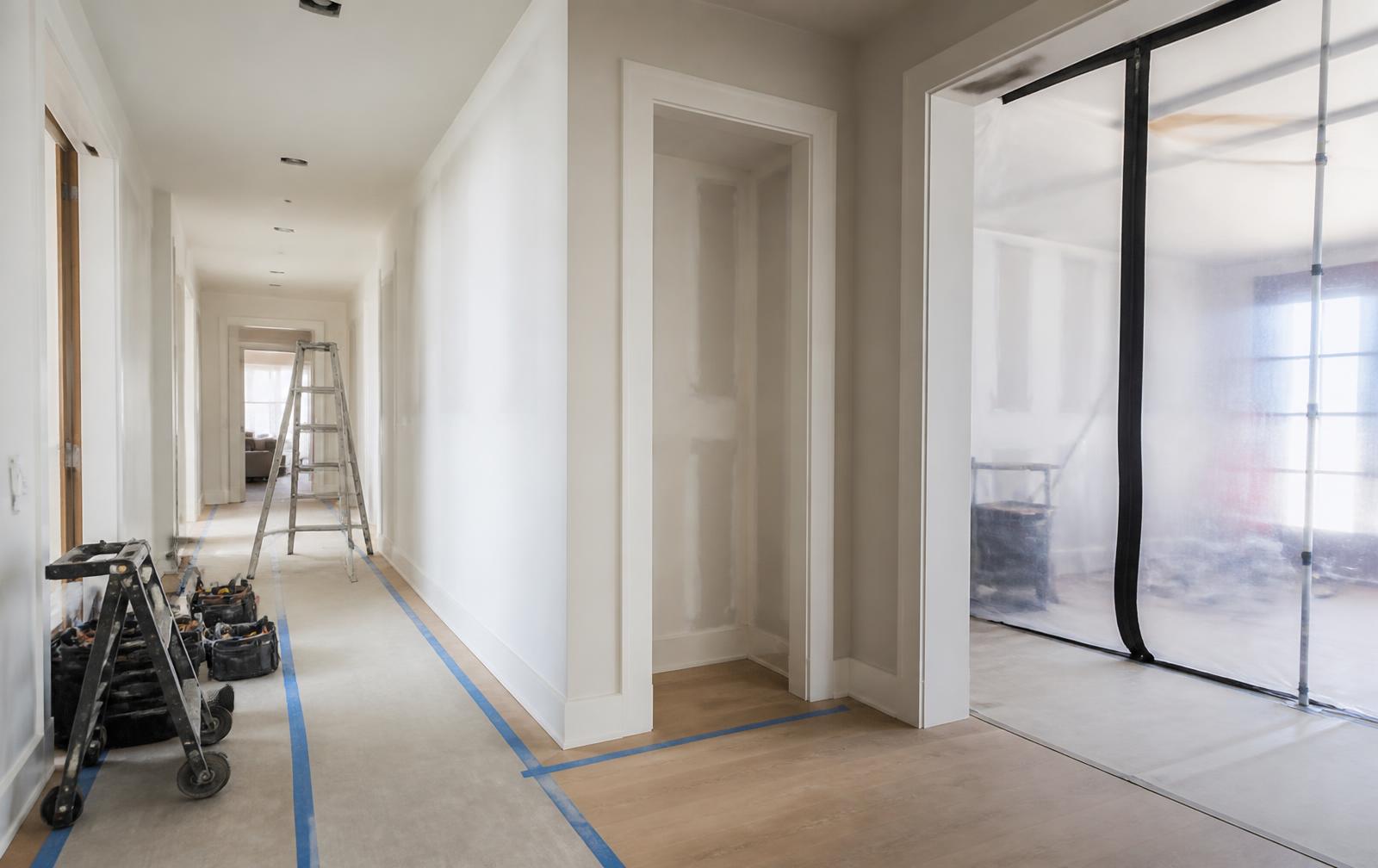
The three scopes of work.
Cosmetic refresh. Finishes, lighting, paint, millwork, and fixtures. Fast, contained, and the right answer for a house whose plan already works.
Whole-home renovation. The plan changes. Kitchen and primary suite move or expand, ceilings open, window openings enlarge toward the water, and systems are replaced. Months, not weeks.
Down-to-frame rebuild. Everything but the structure and slab. Effectively a new house on a proven lot, often with an addition and a rebuilt outdoor living program.
Sequencing and approvals.
Exterior changes typically require architectural review by the community’s governing association, and any dock or shoreline work is permitted separately by Duke Energy. County and town building permits follow the approved drawings.
Requirements, timelines, and approvals are controlled entirely by those authorities. Confirm everything in writing with them before design work is finalized.
Living through it.
Whole-home work generally means moving out. A realistic schedule, a single point of accountability, and a clear allowance structure prevent the two things that ruin renovations: drift and surprise.
Interiors, cabinetry, and technology should be selected during design — not during construction. Long-lead items decide the calendar.
Answers, before you ask.
Is renovating at The Point cheaper than building new?
Sometimes, but not always. Cosmetic and whole-home work usually costs less per square foot than new construction, while a down-to-frame rebuild can approach new-build cost. The real advantage is acquiring a lot and position that is no longer available.
How long does a whole-home renovation take?
Design and approvals commonly run several months, and construction commonly runs the better part of a year for a substantial home. Every project differs by scope, jurisdiction, and product lead times.
Do I need architectural approval?
Exterior modifications generally require approval from the applicable architectural review body, and dock or shoreline work requires Duke Energy permitting. Obtain requirements directly from those entities.
What gives the best return in a lake-house renovation?
Reorienting living space toward the water, enlarging glazing, opening ceilings, upgrading the kitchen and primary suite, and rebuilding covered outdoor living space tend to be the highest-impact moves.